
Adopted in March 2024, mandatory as of September 2026: The EU’s EmpCo Directive,“Empowering Consumersfor the Green Transition,” puts an end to vague environmental promises and dubious sustainability labels. What has changed, who it affects, and which statements are now prohibited.
Many claims such as “climate-neutral”, “green” or “environmentally friendly” often come without reliable evidence. This unsettles consumers, weakens trust and makes it difficult to make genuinely sustainable purchasing decisions.
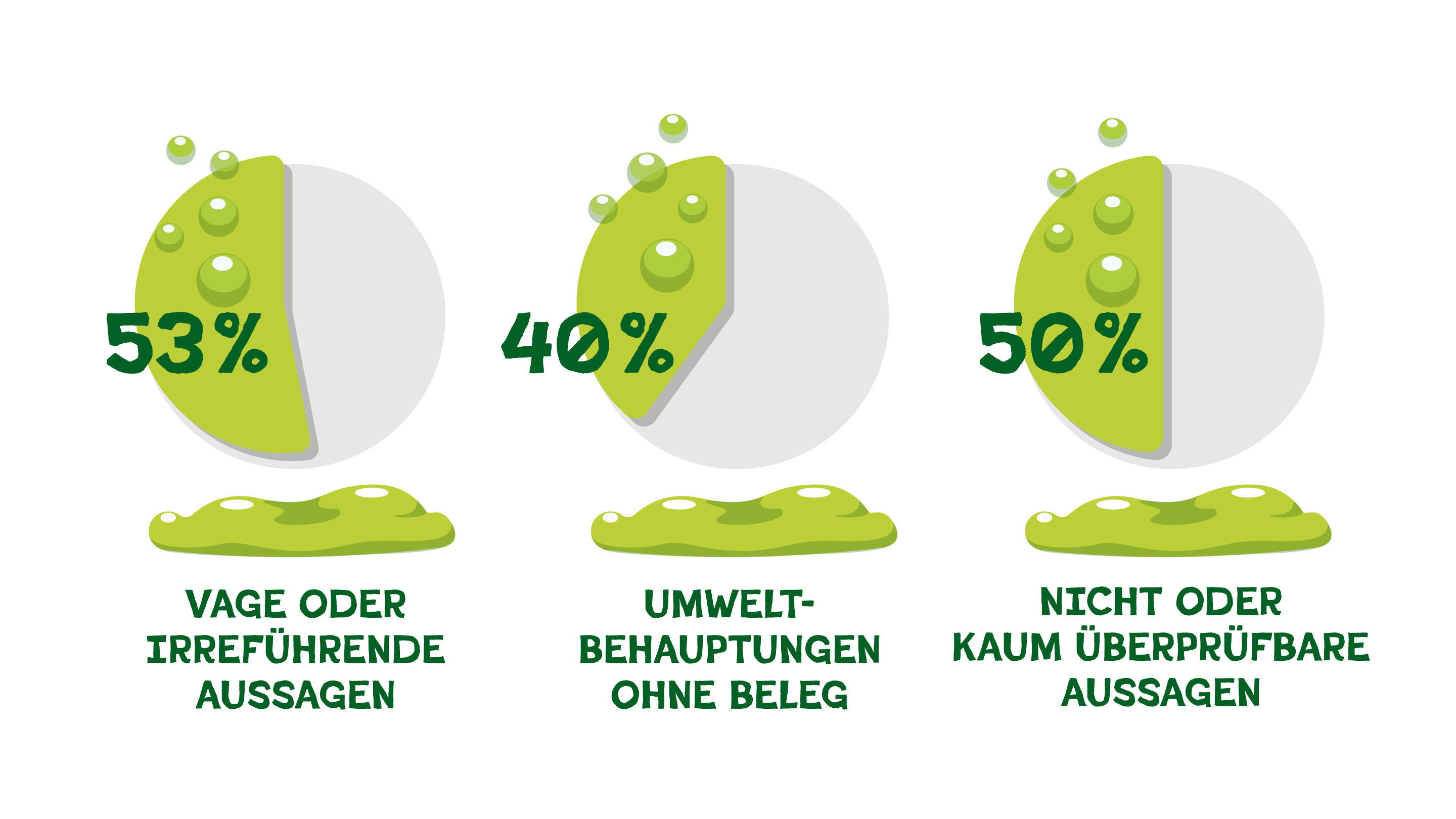
53% of the environmental promises were vague or misleading
40% did not contain any evidence
50% could not be verified or were difficult to verify
At the same time, there are over 230 different ecolabels on the European market – many of which are unknown or unregulated.
The EmpCo guideline strengthens consumers’ rights to information—and requires companies to clearly substantiate environmental and social claims. This includes images and symbols that suggest sustainability.
| Regulation | What does this mean in concrete terms? | Examples |
| General environmental claims | They are only permitted if they are specifically explained and comprehensibly substantiated – on the respective medium, e.g. on the packaging | “Climate-friendly” must be supplemented, e.g. with “100% energy from renewable sources” |
| (Specific) environmental claims | Statements on specific environmental characteristics must be supported by scientific evidence | “100% energy from renewable sources” must be substantiated, e.g. by life cycle assessments (LCA), CO₂ balances in accordance with the GHG Protocol, TÜV test reports, environmental reports |
| Social statements | Information on fair production, working conditions, etc. must be verifiable | SA8000, BSCI, Fairtrade or Sedex certificates, supplier audits |
| Seals and labels | Only environmental or social labels that are independently tested and awarded in a verifiable manner may be used | EU Ecolabel, Blue Angel, Fairtrade, FSC, PEFC, GOTS … |
| Advertising with promises for the future | Statements such as “We will be climate-neutral by 2030” are only permitted if there is a comprehensible plan with interim targets | CO₂ reduction plan with interim targets, audited by an independent body such as TüV, SGS |
| Offsetting alone is no longer enough | Anyone who offsets CO₂ (e.g. through forest protection projects) cannot simply call themselves climate neutral if their own product does not show any real improvement | A mail order company offsets parcel shipping with CO₂ certificates, but does not change anything about packaging or transportation |
| Product service life | It is prohibited to build products in such a way that they break quickly or cannot be repaired | Software updates that slow down devices or permanently installed batteries without a replacement option |
The new EmpCo Directive is aimed at companies that sell products or services to end consumers in the European single market – i.e. the B2C sector. It does not matter whether it is fashion, electronics, cosmetics, food or other sectors: The new rules apply as soon as sustainability plays a role in communication.
B2B companies can also be affected, e.g. if they act as manufacturers for retailers and their products end up with consumers.
Those who don’t make the switch now risk more than just a bad reputation: Violations can result in warnings and fines of at least 4 % of annual revenue.
With the Empowering Consumers Directive (EU 2024/825), the EU aims to curb greenwashing through binding regulations—as part of the European Green Deal. Member states were required to transpose the provisions into national law by March 27, 2026. In Germany, this was accomplished by amending the Law Against Unfair Competition (UWG): The Bundestag passed the corresponding amendment as early as December 2025, and it was published in the Federal Law Gazette in February 2026—meaning implementation is already complete, not merely planned. For companies, the transition period runs until September 27, 2026; after that date, environmental and sustainability claims must comply with the new legal standards.
Was this article helpful for you? Do you have any questions or would you like to make an appointment? Simply contact us and let’s find out together how we can help you quickly.













 back
back
 +49 7171 925290
 kontakt@eberle-werbeagentur.de


