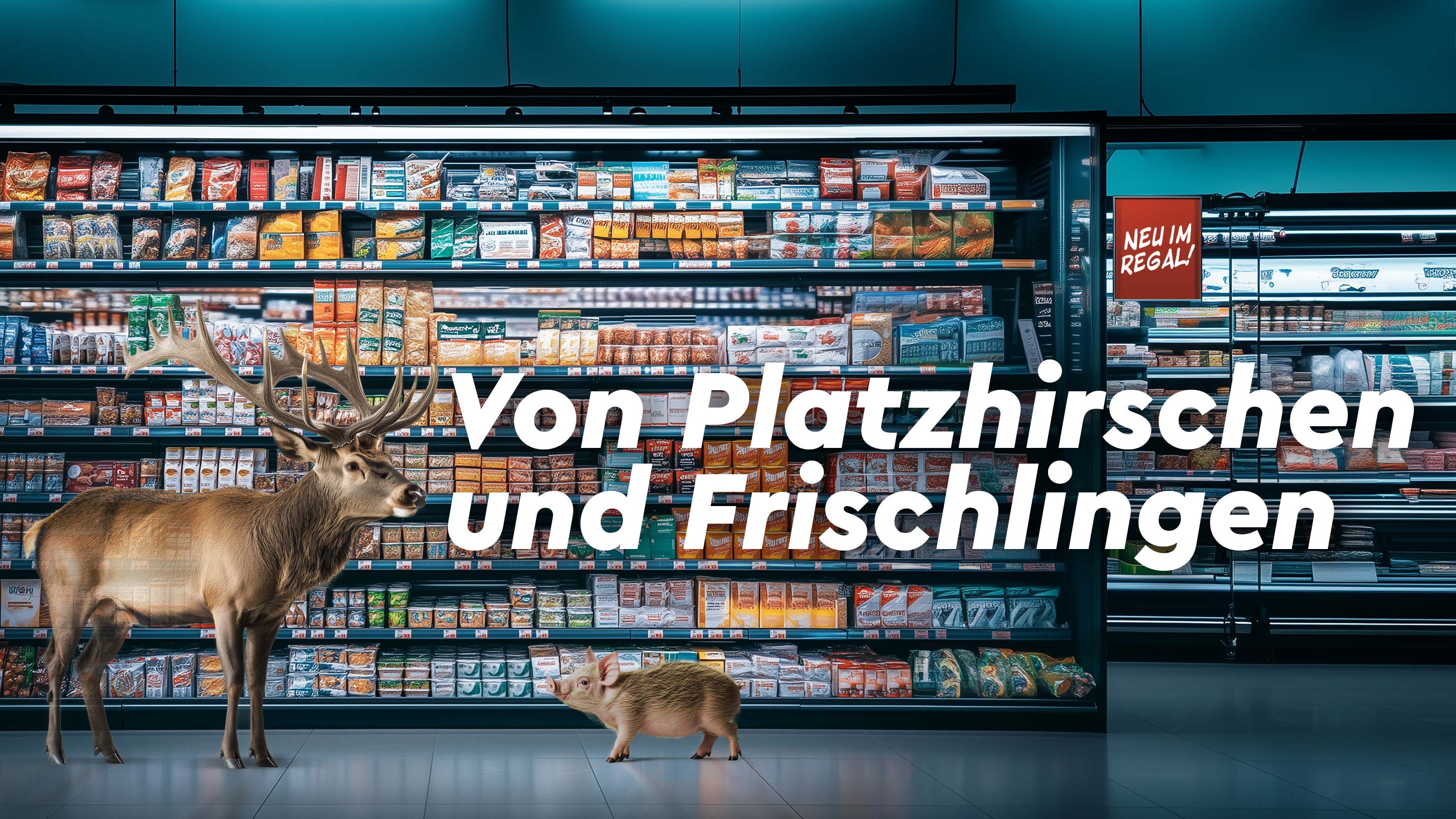
The shelves in the food retail sector are probably the most competitive arena for brands – and a clear brand strategy determines success or failure here on a daily basis. Between the established top dogs that have been loyal to generations of consumers and the newcomers that bring a breath of fresh air with new concepts, it is decided on a daily basis which products end up in the shopping cart – and which do not. In a market where shelf space is the most valuable currency, what counts most is the ability to not only meet consumers’ needs, but to surprise them again and again. But how do the old hands manage this? And what do new brands need to consider when launching products in order to gain a long-term foothold?
Traditional brands such as Dr. Oetker or Bad Reichenhaller have a decisive advantage: they enjoy the trust of consumers. They have built up this trust over decades – through quality, reliability and clear brand positioning. Bad Reichenhaller saltwhich has been an integral part of German kitchens for decades, scores with a clear message: premium quality from the depths of the Alps. The taste of Dr. Oetker’s pudding evokes childhood memories for many consumers, and it is precisely this emotional connection that ensures that established brands are often preferred in purchasing decisions.
But tradition alone is not enough. To remain relevant, these brands must also be innovative. Ritter Sport, for example, has repositioned itself with a consistent sustainability strategy. With fair-trade cocoa and climate-neutral production sites, the brand not only appeals to its existing fans, but also wins over younger target groups.
A good example of the innovative power of established brands is Voelkel, a family business that has been synonymous with organic and natural products for over 90 years. Their ginger shots have managed to turn a niche product into a mass-market trend. These small bottles offer health-conscious consumers a quick energy boost and are a success thanks to their modern design and promise to remain sustainable and organic. Voelkel shows how established brands can successfully market new products and set long-term trends.
On the other hand, there are young brands such as Holy Energy, Simply V and Just Spices, which are pushing onto the shelves with modern concepts and fresh ideas. These food start-ups know how to win over consumers through transparency, clear communication of benefits and contemporary brand management. Just Spices, for example, began as a digitally focused spice brand with a strong direct-to-consumer business. The brand is now also listed in traditional food retail and is available in many supermarkets. This broader presence combined with the strong online community shows how young consumer goods brands can successfully grow from a digital starting point to an omnipresent product in food retail.
The Haferkater brand is an inspiring example of a successful alternative product launch. The success story began in Berlin in 2014, when the three founders Leandro Burguete, Anna Schubert and Levin Siert recognized a gap in the market for healthy, vegan takeaway food. Their idea: to reinvent the classic oatmeal and establish it as a trendy, modern dish.
The first steps were unconventional: they opened their first porridge café in a former kebab shop in Berlin-Friedrichshain. The response to the concept was so positive that the brand reached a key milestone in 2016 when it won a start-up competition organized by Deutsche Bahn. The win enabled Haferkater to open a pop-up store at Berlin Central Station. This location was a strategic success, establishing Haferkater not only as a breakfast alternative, but also as the perfect brand for rail travelers.
From there, the brand expanded in a targeted manner: With new branches at train stations and busy squares, Haferkater became a permanent fixture on the go. It is particularly noteworthy that the brand has also made the step into food retailing (LEH) in addition to its own cafés. Today, Haferkater ready-made products are available in over 4,000 supermarkets across Germany, including organic and large retail chains. The products are consistently based on organic ingredients, sustainability and a vegan-vegetarian range.
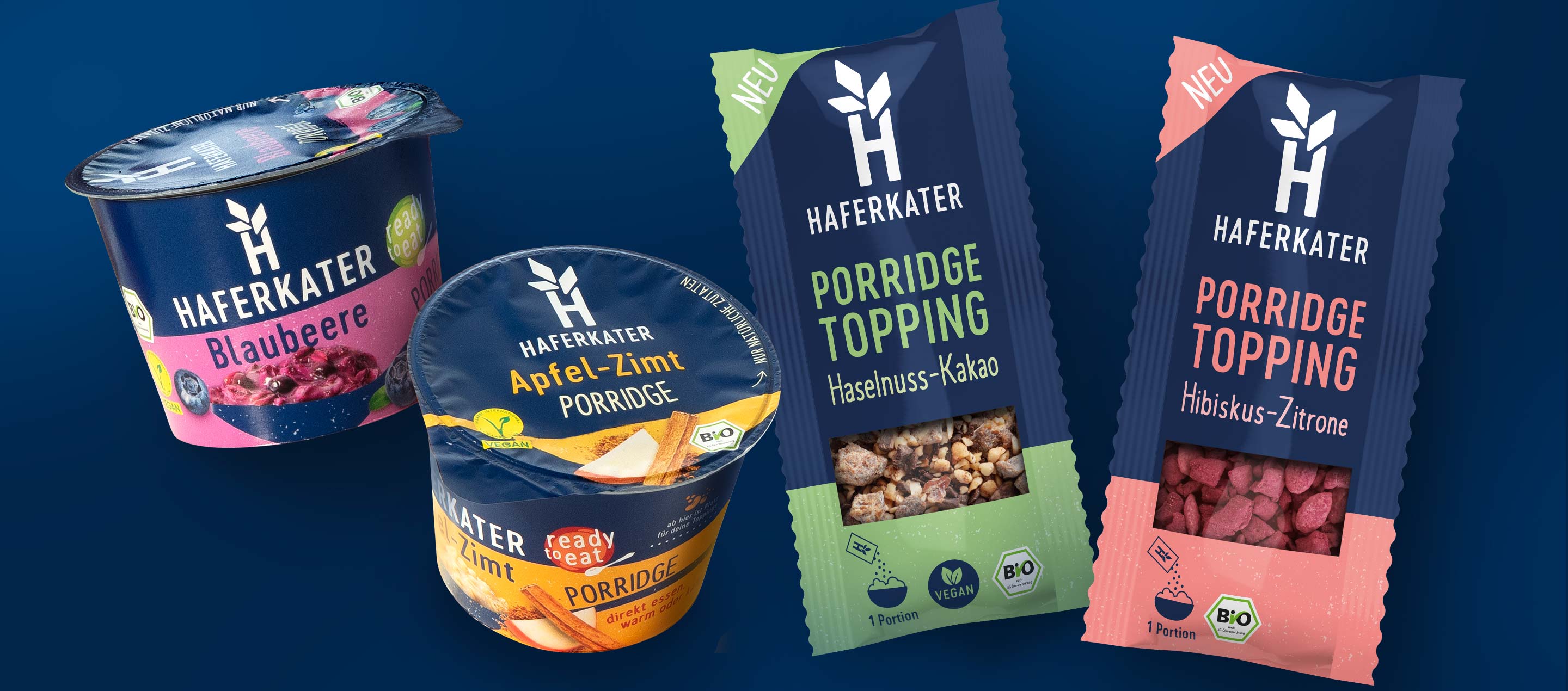
Haferkater shows how a niche product with a clear vision and a creative approach can grow into an established brand. Its success underlines the importance of a consistently well thought-out brand concept, an innovative sales strategy and the ability to adapt to different markets – from train stations to supermarkets. A prime example of how alternative paths can also lead to a successful launch in the food retail sector.
But not all new brands make the leap: competition in food retail is fierce and many disappear from the shelves faster than they arrived. The key lies in a combination of innovative products, strong brand communication and a solid retail strategy.
Food retail is more than just a sales platform – it is the stage on which brands fight for visibility and attention. Retail chains such as Edeka, REWE and dm provide the space, but the conditions are strict. Shelf space as a currency means that brands not only have to win over consumers, but also their retail partners. Private labels such as Edeka Bio or REWE Beste Wahl increase the pressure, as they often offer comparable quality at lower prices.
Brands that manage to stand out through prominent placement (e.g. at the checkout or in promotional areas) can benefit from this stage. For young brands and new products in food retail, cooperation with retail chains is crucial in order to maintain a long-term presence.
The most successful food retail brands combine the strengths of tradition and innovation. Rügenwalder Mühle has shown the way: its transformation from a traditional meat producer to a pioneer of vegan and vegetarian alternatives is a prime example of how brands can adapt to new consumer trends while retaining their values.
Another example is the organic brand Alnatura, which celebrated its 40th anniversary in 2024. Alnatura’s range has been continuously adapted and expanded over the years to meet current nutritional trends and customer needs. Product lines such as plant-based alternatives or innovative snacks and drinks continue to underline the brand’s pioneering spirit, while classic products such as flours, cereals and oils continue to form the core range that has characterized Alnatura for decades.
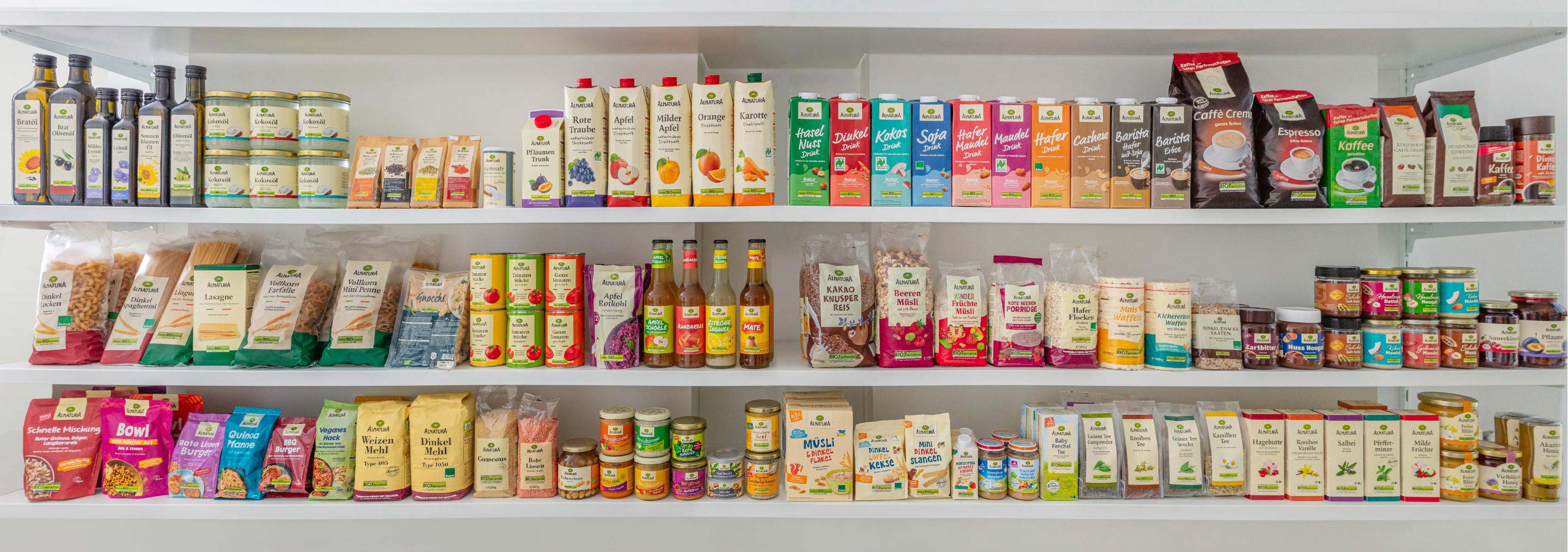
Alnatura’s innovative strength can also be seen in the conversion of the entire dairy range to organic pasture milk, a significant step towards higher quality and increased animal welfare and goes well beyond the requirements of EU organic and association guidelines. This not only clearly differentiates Alnatura’s dairy range, but also strengthens the brand’s pioneering role.
The successful launch of new products in food retailing requires a strategic approach based on market knowledge, innovation and consumer needs. These five rules provide a solid orientation for a successful market launch:
A deep understanding of the respective target group and their needs such as sustainability, health or regionality is a prerequisite for a successful market launch.
A clear unique selling point ensures differentiation and recognizability on the shelf.
Packaging design is the most important touchpoint in food retail. It must attract attention, provide orientation and convey brand values. For example, the simple packaging of the Alnatura basic range emphasizes the contents and creates a timeless brand identity that will endure for decades. Link to the case
Strategic placement in retail often determines success. Prominent shelf space, promotional areas or exclusive partnerships with retail chains can help to increase the visibility of the product. Entry via smaller markets or specialized retailers can be used as a test run to optimize the concept.
Example: Voelkel built up a loyal target group through cooperation with organic food stores and health food stores before the products became widely available from large retailers.
Consistent and authentic brand communication creates trust and enthusiasm. Clear messages, a convincing story and the use of modern communication channels such as social media or influencer marketing promote awareness and arouse the interest of potential customers.
Example: MyMuesli has built up strong brand loyalty and a loyal fan base through personalizable products and targeted storytelling.
The food retail sector remains a highly competitive market in which established brands benefit from their trust and consistency, while young brands score points with innovations and fresh concepts. However, the following applies to both: quality, values and the ability to reinvent oneself are crucial for a long-term market presence. The success factors for new product launches in food retail lie in the combination of a convincing product, strategic placement and a clear brand message. A diverse brand landscape enriches the retail sector and offers consumers the opportunity to discover something new without having to give up the tried and tested – this is precisely what makes competition so exciting.
A successful brand strategy in food retail is based on clear positioning, an understandable brand message and a high level of recognizability on the shelf. It is crucial that consumers understand within a few seconds what a brand stands for and what specific benefits the product offers.
Packaging is the most important touchpoint in food retailing. It acts simultaneously as a brand ambassador, information medium and impulse purchase. A good packaging design provides orientation on the shelf, differentiates from the competition and conveys the values of the brand at first glance.
Sustainability has long been a relevant competitive factor. Consumers expect transparent, credible concepts – from product composition to packaging. Successful brands strategically integrate sustainability into their brand management instead of just using it for communication purposes.
Young brands should start with a clear target group analysis, a clearly defined USP and a well thought-out sales strategy. Alternative entry points such as direct-to-consumer models, gastronomy or pop-up concepts can help to build brand awareness before entering the food retail sector on a large scale.
Many products fail not because of quality, but because of a lack of differentiation, unclear brand communication or a lack of visibility on the shelf. Without a clear brand promise and close coordination with retailers, sustainable listings are difficult to achieve.
Retailers are key decision-makers in the food retail sector. In addition to consumer benefits, factors such as sales strength, product range logic and brand profile play a decisive role. Successful brands consider the requirements of retail partners from the outset.
Yes, established brands can continue to grow through innovation, new product lines and credible transformation. Examples show that the combination of brand tradition and contemporary brand management is a strong growth model.