Companies must constantly develop their brands in order to remain relevant and reach their target groups. Rebranding is a powerful tool in this process. But how do brands successfully create a new image? What really matters? Let’s take a look at the key elements of a successful rebranding strategy.
Brands today face the challenge of constantly evolving and adapting to new market conditions. An evolution of the brand can often be more effective than a complete redesign. A well thought-out rebranding makes sense if new target groups need to be tapped into or negative associations corrected. However, the decision to take this step should always be based on an in-depth brand analysis to ensure that the need for rebranding really exists. Only those who understand the existing associations, brand expectations and future needs of the target group can develop a successful brand strategy.
These steps ensure that the rebranding is based on a solid, data-driven foundation and that all relevant perspectives are taken into account.
As promising as a rebranding may be, it also harbors risks. An image change that is too radical can alienate loyal customers and dilute the brand essence. One of the biggest challenges lies in brand communication: how can new target groups be addressed without alienating existing customers?
Jaguar’s rebranding, which was unveiled at the end of 2024 as part of the strategic realignment to become an all-electric luxury brand, caused quite a stir. With a new wordmark, a significantly reduced role for the traditional Jaguar symbol and a strongly fashion and lifestyle-oriented visual language, the brand deliberately focused on provocation and maximum attention.
Although the repositioning achieved a high level of media visibility and intensive discussions, it coincided with a particularly critical economic phase. In Europe, there was a drastic slump in new registrations in 2025. However, this slump is primarily due to the deliberate discontinuation of classic combustion models and the transition phase without new series vehicles.
It is precisely this development that illustrates the gravity of a radical brand decision: The communicative repositioning has been completed, but the proof of its economic viability is yet to come. Whether Jaguar will benefit from the new brand identity in the long term will only become clear when the design, product language, dealership experience and new electric models can translate the high level of attention into actual purchasing decisions and lasting brand loyalty.
Whether iconic symbols that are suddenly missing or communication breaks that unsettle customers – the following examples show how quickly rebrandings can fail:
Burberry first modernized its brand image and said goodbye to the traditional “Equestrian Knight” logo – a symbol that had stood for values such as honour and progress since 1901. Instead, the brand opted for a reduced, contemporary design that emphasized clarity and visual austerity. A few years later, a return followed: the iconic equestrian logo once again became part of the brand identity to emphasize the brand’s British roots and emotional depth. Some see this as a successful return to its origins – others wonder whether the design line of recent years is losing its clarity.
Tropicana changed its packaging design so radically in 2009 that key recognition features such as the bright orange disappeared. Customers reacted with incomprehension, sales figures plummeted – the new design was immediately withdrawn. A lesson in brand symbols.
In 2010, Gap attempted a minimalist redesign of its logo – Helvetica font, small blue square – which was met with massive criticism. Identification with the brand suffered and the new design was withdrawn after just one week. The lack of customer involvement contributed significantly to the failure.
In 2021, Bahlsen caused a sensation with a radically reduced packaging design: there was applause in the design community, but the brand was then often overlooked on the shelves. The result: a drop in sales figures. Many felt that the new design was too elitist and undercooked – a particular problem in the price-sensitive environment.
Since June 2025, the role has been reversed: the company is launching a new packaging concept on the shelves that marks a turnaround: The focus is now back on familiar visual codes: the eye-catching typography has to make way, the dark blue typical of the brand returns across the board, clearly staged product shots take center stage – complemented by a chocolaty “B” as a striking symbol of enjoyment. It is a rebanding of the rebranding, combined with a new content focus: away from the perceived premium niche and back to the everyday pleasure companion.
What remains is an instructive example of the complexity of brand management: rebranding is not a purely creative discipline, but a strategic balancing act between creative vision, brand DNA and consumer understanding.
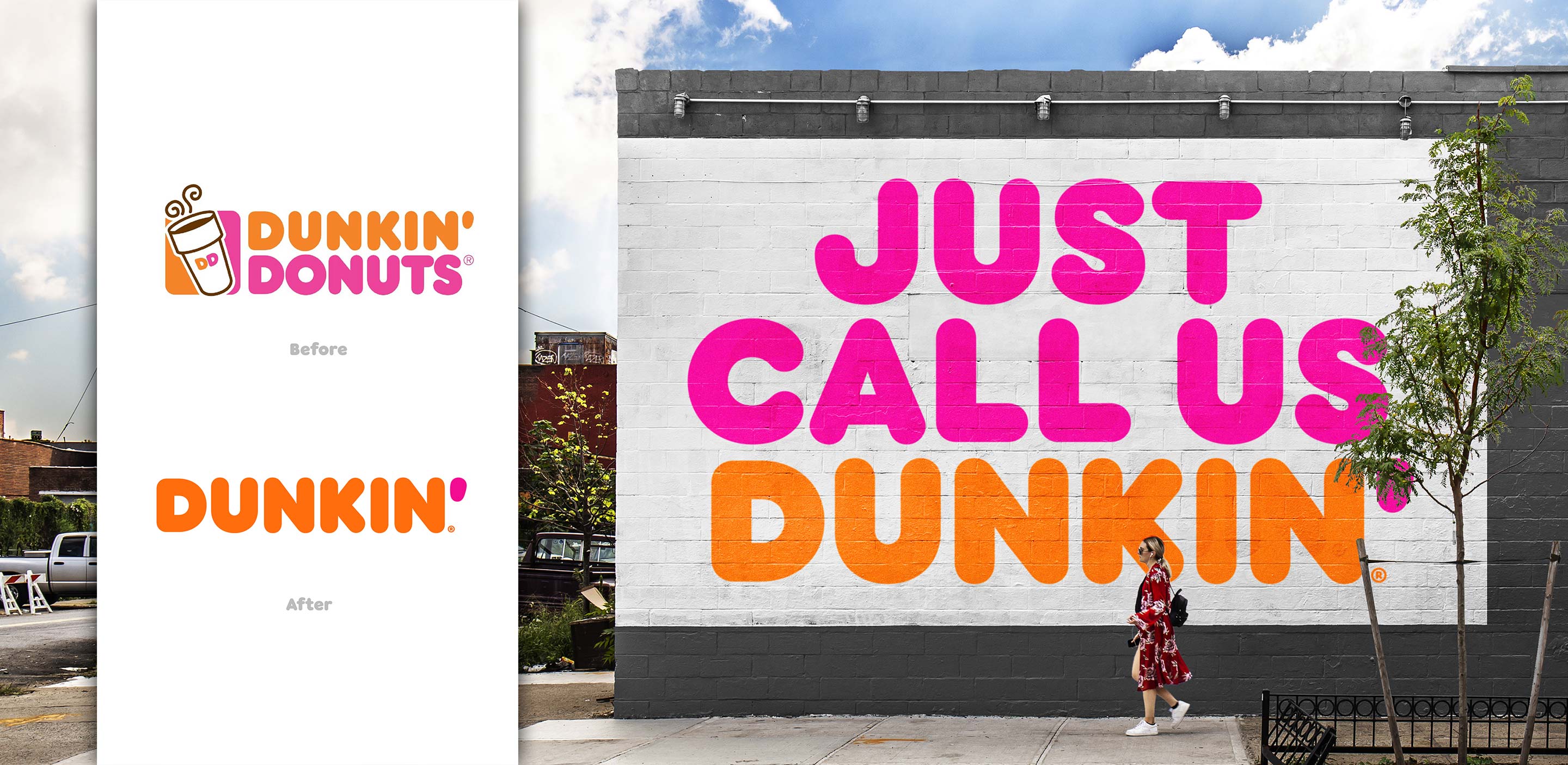
Dunkin’ Donuts becomes Dunkin’: As the company expanded its product range to include coffee specialties and take-away drinks, it had to position itself accordingly. As the brand name included “Donuts”, shortening the name was a sensible and successful rebranding. On the one hand, it removed the close associations with donuts and, on the other, it helped to expand the product portfolio in the customer’s perception.
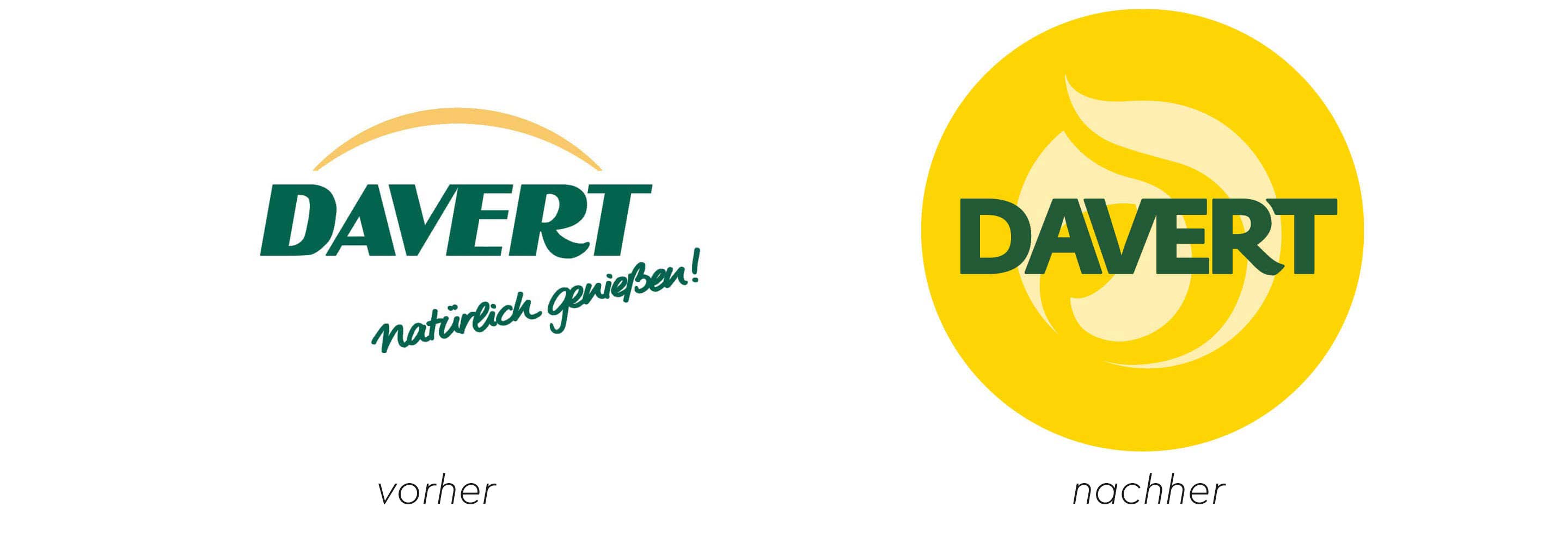
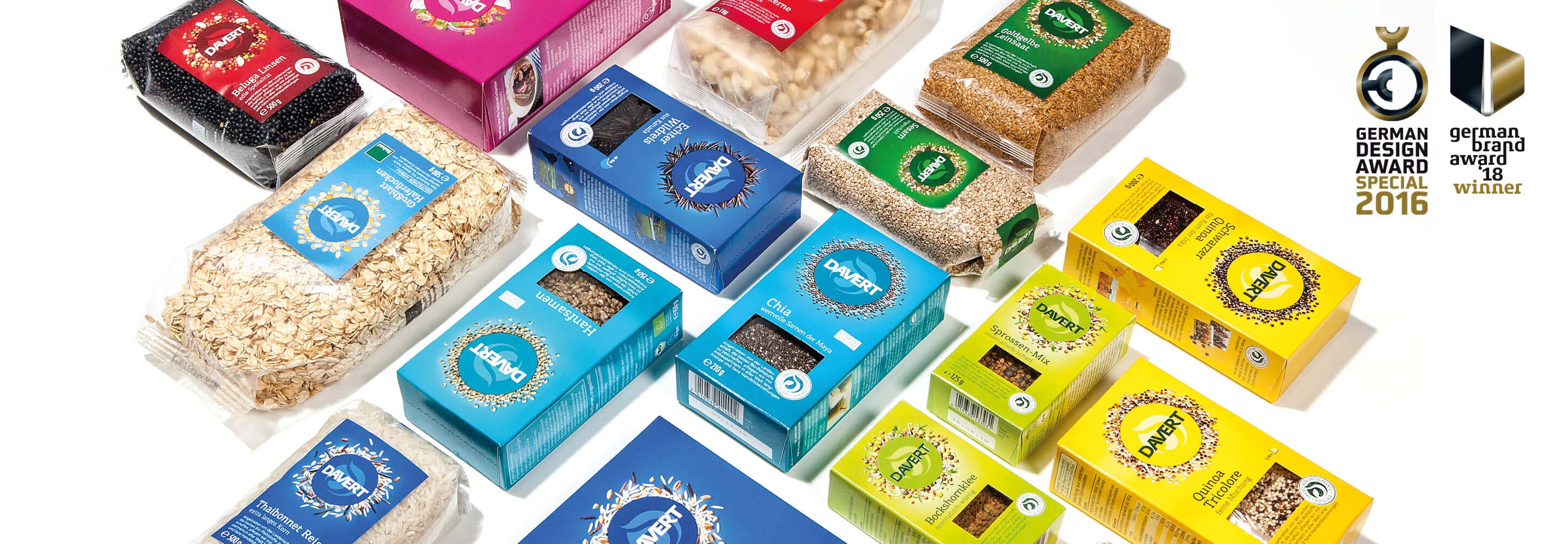
The transformation of the Davert organic brand illustrates the power of professional collaboration in the rebranding process. In close cooperation with Eberle Branddesign & Communication as creative agency, Davert underwent an in-depth strategy process that resulted in a striking repositioning. The design teams developed a comprehensive visual concept that strengthened the brand identity in all aspects, from the logo and packaging to the entire brand communication.
A particular feature of this repositioning was the use of category-specific, bold colors, which significantly increased the visibility of the products at the point of sale. This approach helped to give Davert a distinctive presence in the organic segment that stood out from the competition. At the same time, we managed to preserve space for important product information, such as the guarantee of origin, which further strengthened trust in the brand.
The results of this strategy were impressive: Davert recorded a significant increase in its retail presence and almost doubled its turnover in just three years. The innovative repositioning also attracted attention outside the markets, which was underlined by the presentation of the German Brand Award and the German Design Award.
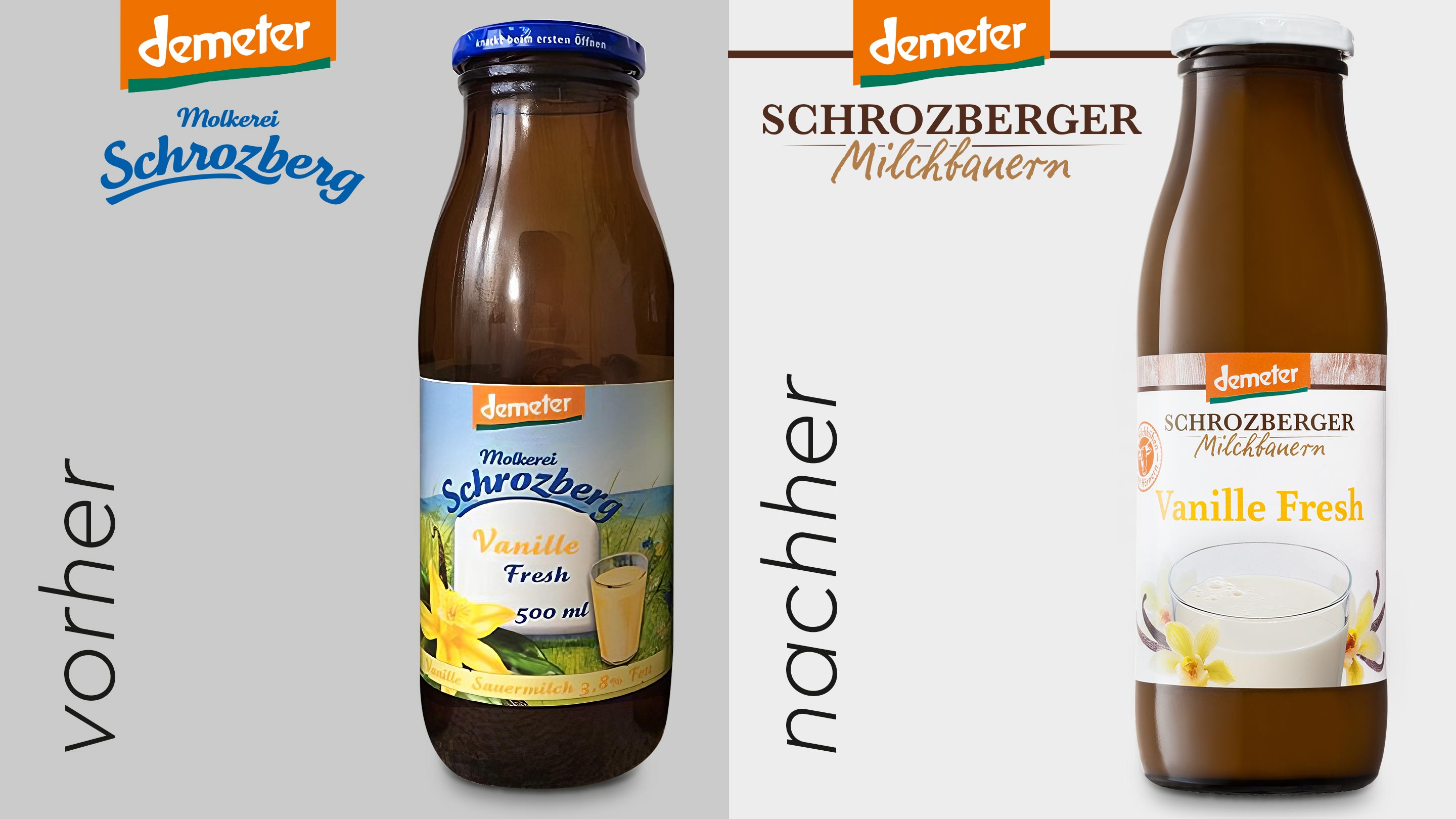
The example of Schrozberger Milchbauern shows how a rebranding can give not only the visual appearance but also the entire brand perception a new boost. The focus of the brand relaunch was a consistent return to the origins – not nostalgic, but deliberately forward-looking.
A key lever in the repositioning was the renaming of the brand. Molkerei Schrozberg became Schrozberger Milchbauern – a name that refers directly to the cooperative structure and the people behind the product. This not only strengthened the producer perspective, but also made it an identity-forming element of the entire communication.
The visual design was modern, but at the same time deeply rooted in craftsmanship: A clear visual language with authentic portraits of the farming families gives the brand an unmistakable face. The claim “Stubborn with passion” gets to the heart of the cooperative’s philosophy – and also served as a creative springboard for a variety of communication measures.
The new positioning was also visible in the packaging: the design combines a traditional look with a premium feel – with plenty of white space, clear typography and a high-quality materiality that builds trust.
The relaunch of Schrozberger Milchbauern clearly demonstrates how well thought-out rebranding can not only ensure greater visibility, but also a deeper emotional connection to the brand. When attitude is more than just a buzzword – and is consistently translated into design, language and brand management.
A successful rebranding requires much more than a new design – it is a strategic balancing act between brand tradition, understanding of the target group and creative implementation. The case studies show: Those who manage to make attitude visible, combine visual clarity with depth of content and react flexibly to market feedback not only strengthen their brand identity, but also their competitive position.
Clear principles are needed to ensure that the brand relaunch is a lasting success – and this is precisely where the following “5 golden rules for successful rebranding” come in:
A successful rebranding begins with a precise objective. The company should know exactly what it wants to achieve with the rebranding, whether it is tapping into new target groups, modernizing the brand or correcting negative associations. This creates a strategic basis and ensures that all measures work towards a central goal.
To ensure that the new image is well received by the public, the company should conduct extensive market research and collect feedback from various sources. Customer surveys and focus groups can be used to determine how the brand is currently perceived and what expectations the target group has. In this way, customer needs can be integrated into the rebranding in the best possible way.
While a rebranding often requires a visual change, the core identity of the brand must be preserved. Successful brands retain their core values and communicate them consistently. This fosters loyalty with existing customers and prevents the rebranding from being perceived as too radical.
A good rebranding design is flexible and can adapt to future changes. It is therefore important to think about the development of the brand in the coming years in order to avoid the rebranding quickly needing to be updated. In this way, the brand can survive in a dynamic market environment.
The success of a rebranding depends heavily on a consistent introduction. All communication channels and brand touchpoints should be adapted to the new branding at the same time to ensure a consistent brand presence. A well-planned launch increases the acceptance and trust of the target group in the new brand image.
A successful rebranding requires a balance between innovation and tradition. It’s about evolving the brand without losing its core values. Through thorough market analysis, strategic communication and a deep understanding of their brand identity, companies can use rebranding to stay relevant and reach new heights.
Rebranding is recommended when market conditions, target group requirements or the strategic direction of a company change significantly. Image problems, mergers or portfolio expansions can also make repositioning necessary.
A redesign usually only affects visual elements such as the logo, colors or typography. Rebranding, on the other hand, encompasses the entire brand strategy – including positioning, communication, brand values and customer experience.
Changes that are too radical can unsettle or alienate existing customers. There is also a risk that the new brand positioning does not match the actual product or service performance or is not consistently implemented internally.
Market research provides the basis for well-founded decisions. It shows how a brand is currently perceived, what expectations target groups have and where opportunities for differentiation lie.
Depending on the size and complexity of the company, a rebranding can take anywhere from a few months to several years. Strategic repositioning in particular requires time for analysis, development, implementation and market launch.
Successful rebranding strengthens brand perception, improves differentiation from the competition and has a long-term impact on key figures such as brand awareness, customer loyalty and sales growth.
No. Medium-sized companies and smaller brands also benefit from clear positioning and consistent brand management – especially in highly competitive markets.