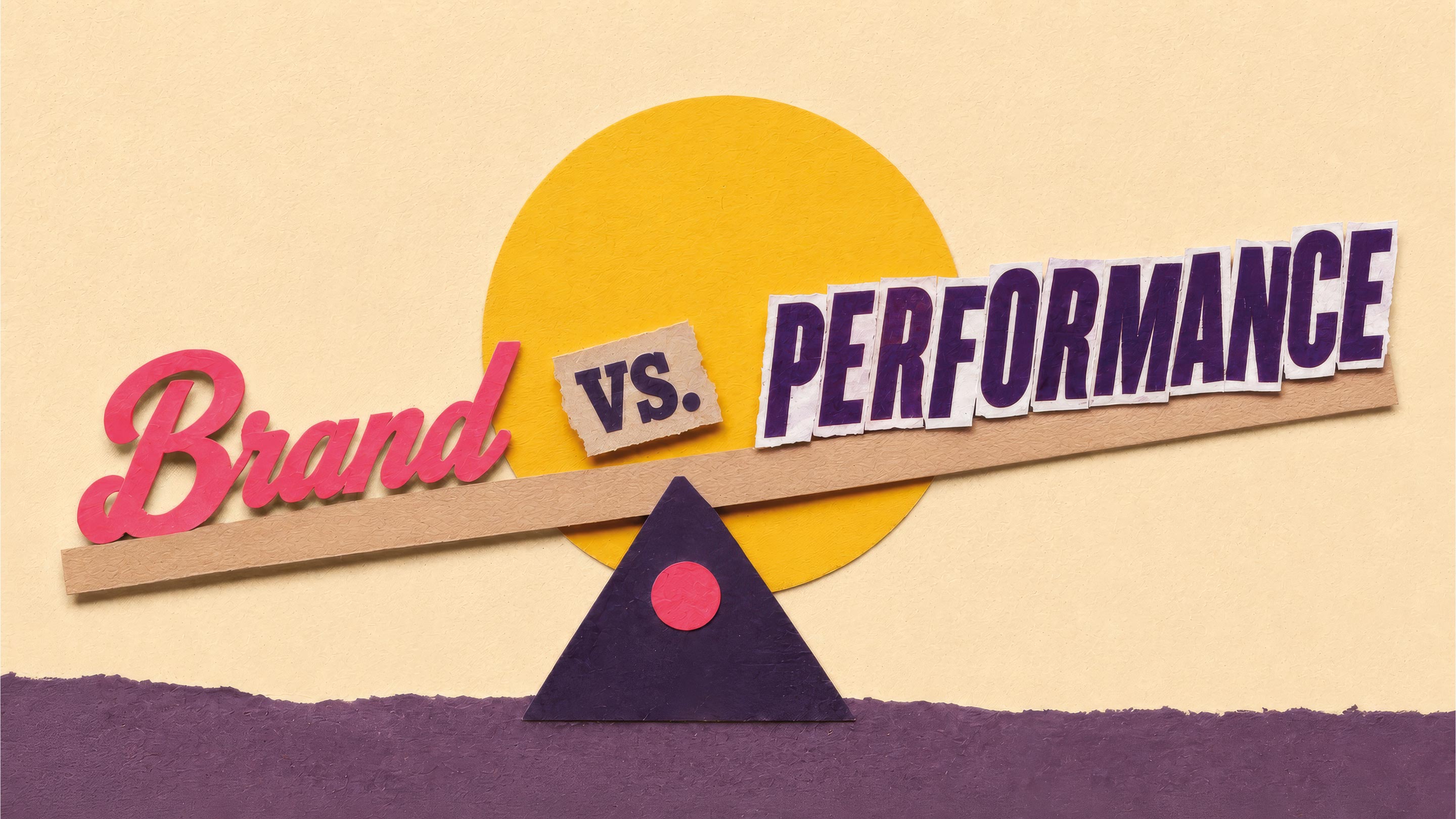
Performance marketing delivers quick results. Brand building creates long-term demand. For a long time, these two approaches were pitted against each other. Today, this distinction hardly makes sense anymore. That’s because strong brands don’t just have an impact at the moment of purchase. They increase the likelihood that activation, sales, and conversion will function efficiently in the first place.
Marketing is under pressure. Budgets must be justified, campaigns are expected to deliver results faster, and executives expect reliable outcomes. In this situation, performance marketing seems particularly appealing: It is controllable, can be optimized in the short term, and appears to be precisely measurable through metrics such as clicks, leads, or conversions.
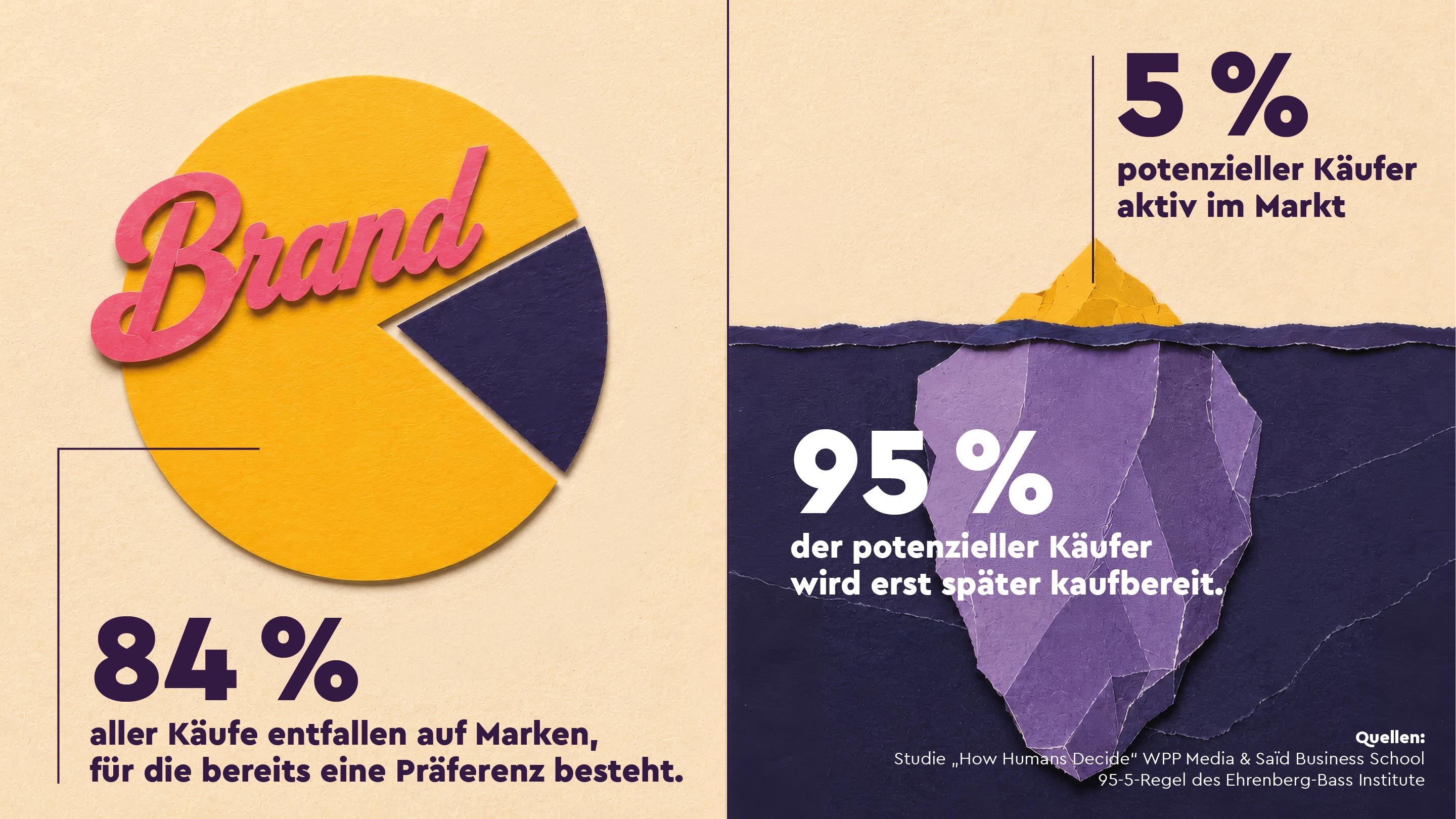
But short-term measurability does not automatically equate to long-term effectiveness. The moment of purchase is rarely the beginning of a decision. In 2025, WPP Media, in collaboration with the Saïd Business School, published the study “How Humans Decide,” based on 1.2 million purchase journeys. The key finding: In 84 percent of purchases, people choose brands for which they already have a bias or preference.
Many decisions, therefore, aren’t made for the first time at the shelf, in the search results, or in the store. That’s often just where they become apparent. Experiences, expectations, and memories have already built up beforehand. This effect is described as “brand priming”: A brand has already been positively primed before a specific impulse to buy arises.
However, engagement remains important. Promotions, search results, product pages, retailer placements, or point-of-sale initiatives can make decisions easier. But they are more effective when a brand is already known, understood, and viewed positively.
Brand building, therefore, is not merely a soft counterbalance to performance. It builds mental availability. A brand must quickly come to mind in relevant purchasing situations, be clearly categorized, and, ideally, trigger a positive preference.
The Ehrenberg-Bass Institute’s 95-5 rule illustrates this principle particularly clearly: At any given time, only a small portion of potential buyers is actively engaged in the market. A significantly larger portion will only be ready to buy later. Those who invest almost exclusively in short-term activation are primarily targeting the visible portion of the market. However, anyone who wants to grow must also maintain a presence among the people who aren’t buying today but will become relevant tomorrow.
In practical terms, this means that brand building should not be treated as a leftover budget item. A consistent portion of investments must be allocated to reach, recognition, preference, and top-of-mind awareness. Brand building does more than just improve a company’s image; in the long run, it reduces pressure on customer acquisition, sales, and pricing.
In many companies, brand building and performance marketing are treated as separate organizational functions. The long-term brand budget is planned differently from the short-term activation budget. Brand image and sales follow different evaluation logics. This exact pattern is also evident in a Nielsen study for Europe: Only 23 percent of marketers measure their digital and traditional media spending holistically. This creates an artificial separation: brand on one side, performance on the other.
However, people don’t experience brands through budget line items, but rather through touchpoints. Each of these interactions can shape perception, build trust, or facilitate a purchase decision. WARC describes this connection in its report “The Multiplier Effect”: A strong brand enhances the impact of subsequent activation. When people already know, understand, and trust a brand, the impulse to buy requires less persuasion. This doesn’t replace performance—it makes it more efficient. Strong brands are recognized more quickly, remembered more easily, and are less likely to be judged solely on price. This can lower acquisition costs, increase conversion rates, and reduce price sensitivity.
This is precisely where the business value of brand building lies: It not only creates long-term brand awareness but also improves the conditions under which short-term activation can be effective.
The key challenge for companies and brands is to stop treating brand building and performance marketing as separate disciplines. Both contribute to the same growth strategy. A full-funnel approach, therefore, does not first ask whether a measure is “brand” or “performance.” It asks what role a measure plays in the decision-making process.
Short-term metrics such as leads, conversions, or cost per conversion remain important. However, they should be linked to long-term brand indicators such as awareness, consideration, preference, recognition, top-of-mind awareness, or share of search.
Even the traditional channel segmentation falls short. Analog and traditional measures can certainly drive engagement, while digital measures can contribute to brand building. What matters is not the specific role a touchpoint plays within the customer journey.
The key question, therefore, is not: Brand building or performance marketing? Rather: How does a brand create the conditions necessary for performance marketing to be effective in the first place?
Strong brands perform better because they lay the groundwork for purchasing decisions. They are recognized more quickly, remembered more easily, and chosen with less effort to persuade. Brand building is therefore not the opposite of performance marketing. It is the foundation that ensures activation remains effective and cost-efficient in the long term.
Brand building strengthens brand awareness, trust, and brand preference over the long term. Performance marketing focuses on short-term goals such as leads, conversions, and sales.
Well-known brands are recognized more quickly and are more likely to be chosen. This reduces customer acquisition costs and improves the likelihood of conversion.
Only about five percent of potential customers are currently ready to buy. The remaining 95 percent must be reached through ongoing brand-building efforts.
A brand has mental availability when it immediately comes to mind when people are in a purchasing situation. This increases the likelihood of a purchase decision.
Brand priming describes the positive influence that prior experiences or interactions have on a brand. As a result, purchasing decisions are often influenced even before the actual moment of purchase.
In the short term, yes. However, sustainable growth also requires brand-building to ensure demand and trust in the long term.
A full-funnel approach combines brand-building and activation throughout the entire customer journey—from initial awareness to purchase.
Yes. Content marketing, social media, and videos boost brand awareness and trust, thereby supporting long-term brand building.
Brand building creates demand; performance marketing drives it. Only the synergy between these two disciplines enables sustainable growth.
Was this article helpful for you? Do you have any questions or would you like to make an appointment? Simply contact us and let’s find out together how we can help you quickly.













 back
back
 +49 7171 925290
 kontakt@eberle-werbeagentur.de


